
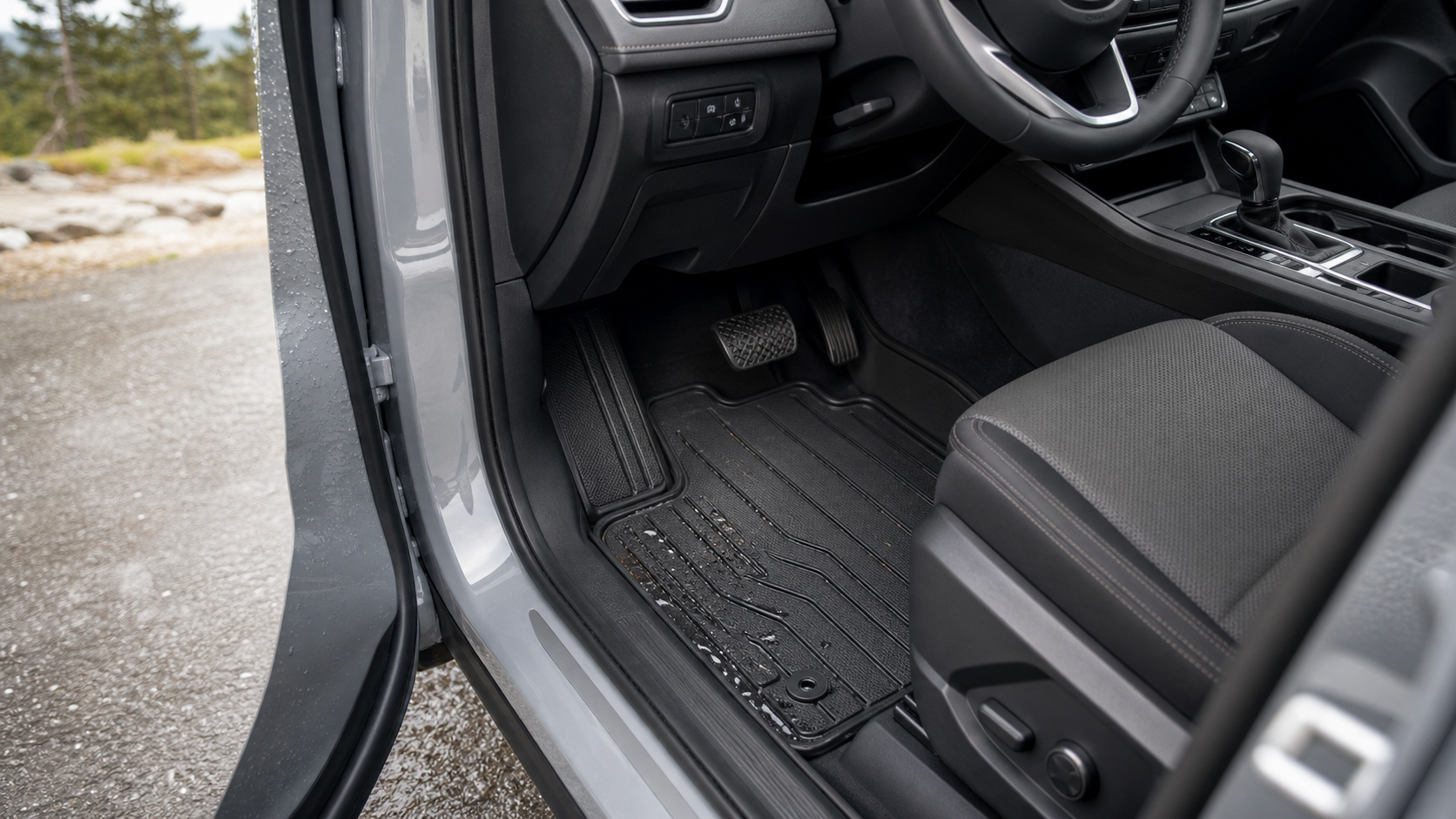
The best car floor mat is the one that matches your exact vehicle, stays fixed in place and never enters the pedal area. In 2026, shoppers can choose from universal mats, vehicle-specific mats, textured liners and tailored sets. The names sound similar, but fit is the first decision—not colour, pattern or price.
This guide is designed for Canadian drivers dealing with wet summer shoes, beach sand, autumn grit and winter road salt. It explains what to verify before ordering, how to perform a safety check after installation and which details matter when browsing model-specific listings.
Quick answer: what should you check before buying car floor mats?
Confirm the vehicle's make, model, model year, body style and driving position. Then check that the mat is intended for that exact configuration, uses the vehicle's retention points where applicable, lies flat and leaves full clearance around the accelerator and brake pedals. Never stack a new mat over an existing mat.
- Vehicle identity: make, model, year, trim and body style
- Driver position: left-hand or right-hand drive when the listing distinguishes them
- Retention: compatibility with the factory clips, hooks or pins
- Pedal clearance: no edge, fold or raised section near the pedals
- Coverage: enough protection for the footwell without blocking seat rails or controls
- Care: a surface and construction that suit the dirt and moisture you actually encounter
Why exact fit is also a safety question
Transport Canada warns that an unsecured aftermarket floor mat can move and interfere with the accelerator or brake pedal. Its guidance says to use only one set of mats, remove the factory mats before installing replacement rubber mats, confirm that the new mat cannot move and use the vehicle's retaining pin or clip according to the manufacturer's instructions.
That makes the driver-side mat different from an ordinary interior accessory. A mat can look tidy while still being wrong for the footwell. A useful fit check must happen with the vehicle parked, the engine off and the mat fully installed—not while driving.
For the original safety advisory, see Transport Canada's vehicle floor mat guidance.
Custom-fit, tailored and universal mats: what is the practical difference?
Vehicle-specific or tailored mats
A vehicle-specific listing is organized around a named make and model. That is useful because footwell shapes, retention points and pedal layouts can differ even within one brand. The buyer still has to verify the year and configuration shown on the current product page. A familiar model name by itself is not enough.
Universal or trim-to-fit mats
Universal mats are designed to cover a range of vehicles. Their broad compatibility can be convenient, but it places more responsibility on the installer to verify shape, flatness and pedal clearance. Never cut into structural sections, retention areas or raised channels unless the manufacturer explicitly provides trimming instructions.
Textured and raised-edge designs
Texture can help manage the everyday debris carried in on footwear, while channels or raised borders may help contain small amounts of moisture. However, those features do not compensate for a poor fit. Material and surface features come after the safety and compatibility checks.
A five-minute parked installation check
- Remove the old mat. Do not place the new mat over a carpet mat or another liner.
- Clean the footwell. Remove stones, grit and objects that could stop the mat from sitting flat.
- Match the orientation. Confirm that the driver mat is on the correct side and that its shaped edges follow the footwell.
- Secure the retainers. Engage every factory clip, hook or pin intended for the mat.
- Press every edge flat. Check beside the centre console, door sill, seat rails and dead-pedal area.
- Test pedal clearance. With the engine off, press and release each pedal through its full travel. The mat must not touch, catch or sit beneath a pedal.
- Try to move the mat by hand. If it slides, lifts or folds, do not drive with it installed.
Repeat this check after cleaning the mats and whenever another driver adjusts or removes them. If anything about the installation is uncertain, follow the vehicle and mat manufacturers' instructions or ask a qualified automotive professional.
How to choose for Canadian seasons
Canadian driving can expose one cabin to several kinds of mess in a single year. Summer brings rain, construction dust and sand from weekend trips. Autumn adds wet leaves and grit. Winter footwear carries slush and road salt. Spring thaw turns accumulated residue into damp grime.
Start with the conditions that are hardest on your interior. Drivers who frequently carry wet boots may prioritize easy removal and cleanable surfaces. Drivers in drier conditions may care more about everyday comfort and appearance. In every case, inspect the mat regularly, empty trapped debris and let the mat dry completely before reinstalling it.
Do not assume that “all-weather” guarantees compatibility or a specific performance level. Treat it as a product category, then verify the current listing's material, included pieces, care instructions, dimensions and supported vehicle years.
Use the store catalogue by vehicle, not by appearance
Car Rug Floor Mats carries model-named listings across many manufacturers. Begin with the vehicle badge, then narrow the choice using the exact model and year information on the product page. For example, shoppers can review the current pages for a Toyota Camry car floor mat, Honda CR-V car floor mat, Jeep Wrangler car floor mat or Buick Lucerne car floor mats.
Those links are starting points, not automatic fit guarantees. Product availability, options, images, pricing and compatibility details can change. Read the complete current listing before ordering and contact the store if the model year or configuration is unclear.
Common floor-mat mistakes to avoid
- Buying by brand alone without checking model year and body style
- Stacking replacement mats over factory carpet mats
- Leaving factory retention clips unused
- Accepting a curled edge because it “will probably settle”
- Driving before checking full accelerator and brake travel
- Reinstalling a wet or debris-filled mat after cleaning
- Assuming two similarly named models share the same footwell
Frequently asked questions
Can I put an all-weather mat over the original carpet mat?
No. Transport Canada advises using only one set of mats. Remove the existing mat before installing its replacement, then secure and test the new mat.
How do I know whether a floor mat fits?
Match the listing to the exact make, model, year and configuration. After installation, the mat should lie flat, connect to the intended retention points, resist movement and remain completely clear of the pedals.
Are custom-fit mats automatically safer?
No product label replaces an installation check. A vehicle-specific design can make compatibility easier to assess, but the driver must still verify retention, flatness and pedal clearance.
How often should I inspect my mats?
Inspect them after removal or cleaning, after carrying unusually heavy dirt or moisture, and whenever an edge looks lifted or the mat feels different underfoot. Stop using any mat that moves or interferes with a control.
Final checklist before checkout
Write down the vehicle's full identity before browsing: make, model, year, trim, body style and driver position. Compare that information with the live product description. Confirm what pieces are included and review the latest material, care, shipping and return details. Once the mats arrive, install only one set and complete the parked pedal-clearance test before the first drive.
Catalogue references were reviewed on July 19, 2026. This article provides general shopping and installation information; the vehicle owner's manual and product instructions remain the authority for a specific vehicle.